Vajinal Agenesis

Vaginal Agenesis | Antalya Plastic Surgery

Vginal agenesis

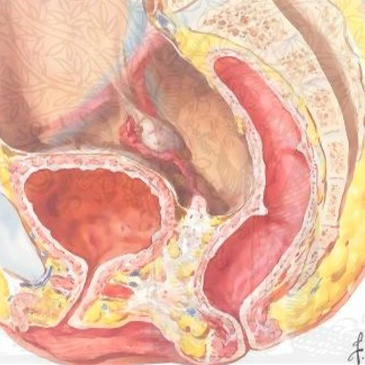
Müllerian agenesis, also referred to as Mayer–Rokitansky–Küster–Hauser syndrome, or vaginal agenesis, has an incidence of 1 per 4,500–5,000 females. Müllerian agenesis is caused by embryologic underdevelopment of the müllerian duct, with resultant agenesis or atresia of the vagina, uterus, or both. The vaginal canal is markedly shortened and may appear as a dimple below the urethra. The ovaries are typically normal in structure and function, though they may be found in atypical locations.

Patients with müllerian agenesis usually are identified when they are evaluated for primary amenorrhea with otherwise typical growth and pubertal development. Müllerian agenesis is one of the most common causes of primary amenorrhea in patients with typical breast development and hair at pubis and armpits. On physical examination, patients with müllerian agenesis have normal height, breast development, body hair, and external genitalia. The vagina is present and may appear as a small flush dimple, or longer, without a cervix at the top.


Vaginal Agenesis | Antalya Plastic Surgery

The goal of treatment is to create a vagina 6 cm or longer and functional for comfortable sexual activity, as reported by the patient. For the treatment of Mullerian Agenesis, Nonsurgical and surgical vaginal elongations are considered to be the first and second line approaches respectively.


Prof. Dr ASIM AYDIN

Plastik Cerrah

Sizi Arayalım

    Vaginal Agenesis | Antalya Plastic Surgery

    We reserve surgical creation of neovagina to the patients who failed to obtain a satisfactory outcome from primary vaginal elongation by dilatation attempts. We favor the most common procedure to create neovagina called McIndoe technique. We typically dissect a space between the urinary bladder and rectum, then place a stent covered with full thickness skin graft harvested from the groins bilaterally. The patient is followed in bed with urinary catheter and on liquid diet to prevent bowel movements postoperatively up to 6-7 days. Postoperative dilation is essential to prevent significant neovaginal stenosis and contracture; therefore, these techniques are not recommended if the patient objects to dilation. Dilators must intermittently be used until the patient engages in regular and frequent sexual intercourse.